
Quick Information

TICKETS

From $36

Plan your visit

Is the Boston Tea Party Ships and Museum worth visiting?

The first minutes are loud, close, and surprisingly involving. You’re handed a role card, ushered into a dim colonial meeting house, and suddenly the room is arguing about taxes, loyalty, and risk. Then the doors open to the harbor, and the replica ships make the story feel physical rather than classroom-sized.

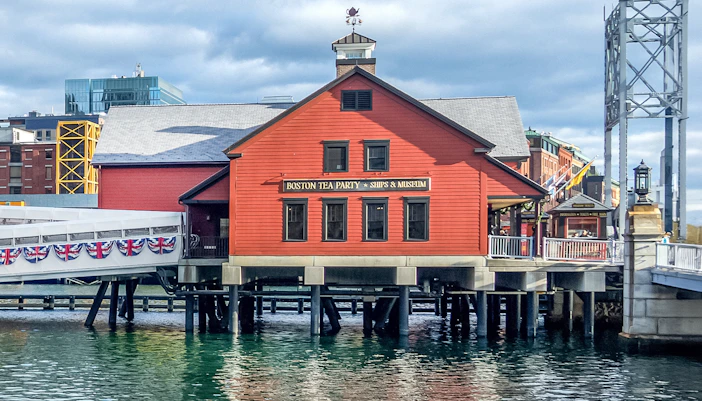
This attraction was built to place you inside the protest that pushed Britain and its colonies toward rupture. Set at Griffin’s Wharf, it uses live interpreters, full-scale ships, and the harbor itself to show why destroying tea became an act of political theater.

The payoff is participation. Most visitors leave remembering not a display case, but the strange jolt of tossing a tea chest into the water and realizing how deliberate, organized, and public that defiance was.

Skip it if you dislike guided role-play or need a quiet, self-paced museum visit.

What to see at the Boston Tea Party Ships & Museum?

Colonial meeting house at the museum
1/6

The colonial meeting house

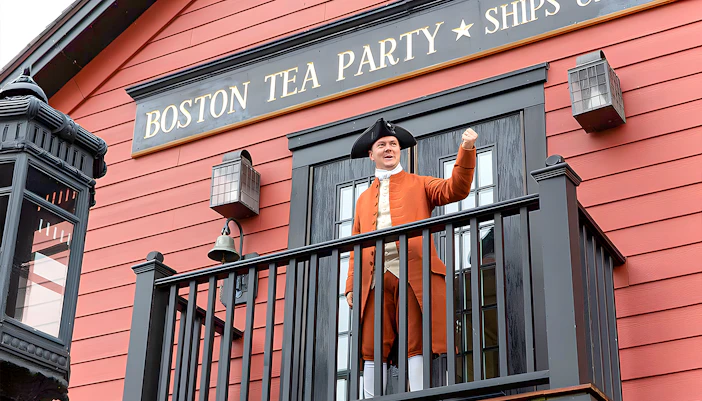
The visit begins with a tense town meeting where costumed interpreters pull you into the Tea Act debate. Arrive early for your timed slot; the opening minutes set up everything that follows.

Griffin’s Wharf and the replica ships

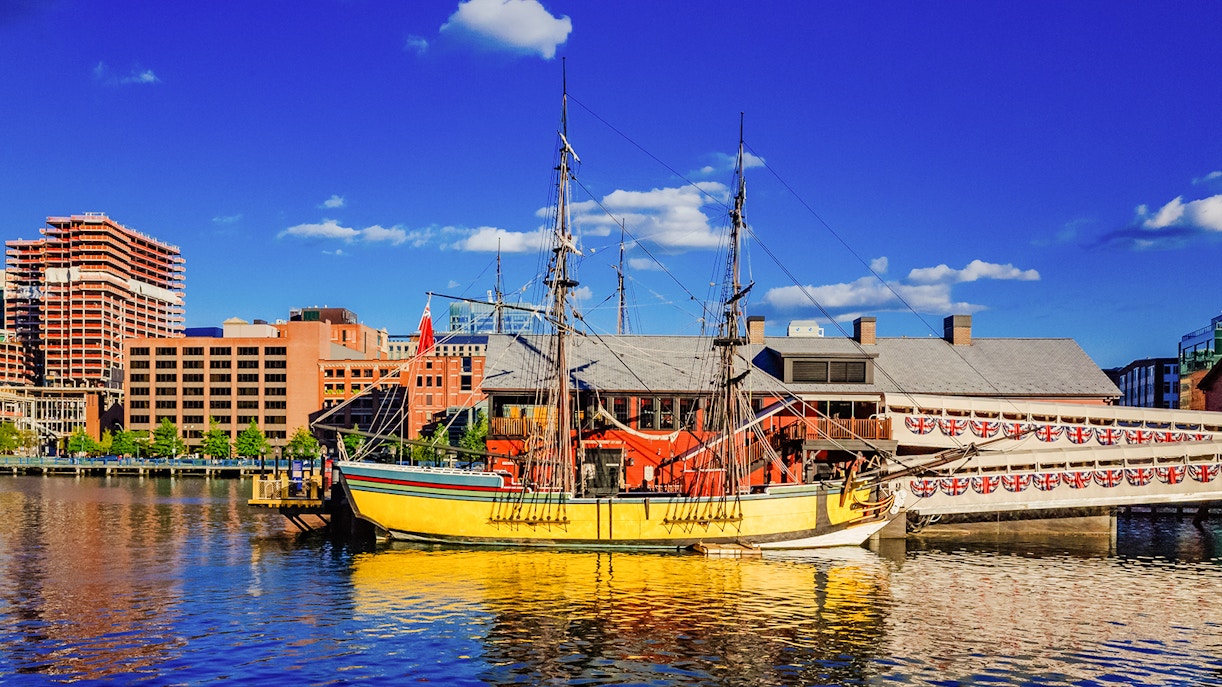
Walking down to the wharf is where the museum shifts from performance to place. Boarding Eleanor and Beaver makes the protest feel logistical, disciplined, and far less abstract.

The tea toss experience

Each visitor gets a replica tea chest to hurl into the harbor. This sequence is the emotional high point, and it moves quickly, so stay with your guide once you’re on deck.

The Robinson Tea Chest

One of only two surviving tea chests from the 1773 protest. After the theatrics, this battered artifact resets the mood and reminds you the story happened in real wood and real water.

The Minuteman Theater

A short film connects the harbor action to the wider rupture between Britain and the colonies. It’s also the part that helps first-time visitors leave with the larger story clear.

Abigail’s Tea Room and gift shop

Open even without museum admission, this final stop is useful if you want to linger. Budget 15–20 minutes for tea or browsing; food and beverages are not included with standard admission.

What to see at the Boston Tea Party Ships & Museum?

Revolutionary Boston is easier to read when you can move between its sites without backtracking. The Combo (Save 5%): Boston Hop-on Hop-off Bus Tour + Boston Tea Party Ships & Museum Tickets links the harbor protest to the city story.

How to explore the Boston Tea Party Ships & Museum

Budget 1 hour for the timed guided tour itself, and 1.5–2 hours if you want time for the artifact displays, gift shop, or a stop in Abigail’s Tea Room. The difference is less about distance and more about whether you linger after the formal program ends.

Start by arriving 10–15 minutes early, since this is a guided, time-slot experience and late arrivals can miss the opening meeting-house sequence that gives the rest of the visit its stakes. From there, follow the designed flow: debate in the colonial meeting house, move out to Griffin’s Wharf and the replica ships, then finish with the film and artifact galleries while the story is still fresh.

  • Must-see: the meeting house debate, the tea toss from the ship deck, and the original Robinson Tea Chest. Optional: Abigail’s Tea Room and the gift shop, which add 15–20 minutes and work best after the tour.
  • Guided vs. self-paced: go guided. This museum is built around performance, pacing, and participation; without the interpreters, the central experience simply doesn’t exist.
A brief history of the Boston Tea Party Ships and Museum

  • 1773: On December 16, protesters boarded tea ships at Griffin’s Wharf and dumped more than 300 chests of tea into Boston Harbor.
  • 1774: Britain responded with the Coercive Acts, turning the Tea Party from a local protest into an empire-wide crisis.
  • 1775–1783: The Tea Party became one of the defining symbols of organized colonial resistance during the American Revolution.
  • 20th century: Boston’s waterfront changed dramatically, but Griffin’s Wharf remained central to the city’s Revolutionary memory.
  • Today: The museum stands on the original site, using replica ships, artifacts, film, and live interpretation to recreate the night that altered American history.

Who built the Boston Tea Party Ships and Museum?

The modern museum experience was shaped by Historic Tours of America, which approached the site as living history rather than a conventional gallery. The ambition was to place you inside the argument, the harbor, and the act of protest through replica ships and live interpreters.

Architecture of the Boston Tea Party Ships & Museum

  • Style: Living-history maritime reconstruction. It feels less like entering a museum building and more like stepping onto a working 18th-century wharf.
  • Materials: Timber decks, rope rigging, dark-painted hulls, and weathered wood surfaces give the replica ships the tactile language of colonial seafaring.
  • Structure: The full-scale ship builds restore proportion; once you’re onboard, you grasp how cramped, exposed, and carefully organized tea transport really was.
  • On the wharf: The shift from enclosed meeting house to open harbor is deliberate, making the political debate suddenly feel public, risky, and irreversible.
  • Designers: No single architect defines the attraction. Its impact comes from museum designers and shipbuilders who treated historical accuracy as part of the storytelling.

More than just a museum

Unlike many Revolutionary Boston landmarks, this one sits directly on the water and uses that geography as part of the storytelling. That matters because the Boston Tea Party was not a speech, a battle, or a document signing; it was a carefully staged public action at a working wharf. Visiting here helps you understand the protest as logistics as much as ideology: ships, cargo, tide, witnesses, and theater. If you’re in Boston in mid-December, the annual December 16 commemorations add another layer to the site’s living civic memory.

Frequently asked questions about the Boston Tea Party Ships & Museum

Yes, especially if you want Revolutionary history to feel physical. The tea toss and live debate give this museum a momentum most history sites don’t have. Book Boston Tea Party Ships and Museum in advance for your preferred time slot.

More reads