- Whale-watching departures are weather- and sea-condition-dependent, and trips may be delayed or cancelled when wind or visibility is poor.
- Fog is common in spring, especially May–June, and can push back morning departures.
- The last trips of the day must return before dark, which may shorten afternoon sailing windows in fall.
- Harbor traffic and ongoing waterfront construction can occasionally slow boarding and departure.
- Always check the operator’s same-day service alerts before heading to Long Wharf.
Best time to go whale watching in Boston: Timings, weather & warnings
Boston whale watching season & timings
| Months | First departure | Last departure | Frequency | Notes |
|---|---|---|---|---|
April–October | 9am | 10am | Twice a day | NA |
November–March | NA | NA | NA | Off-season; no cruises |
Timings notes & visitor warnings
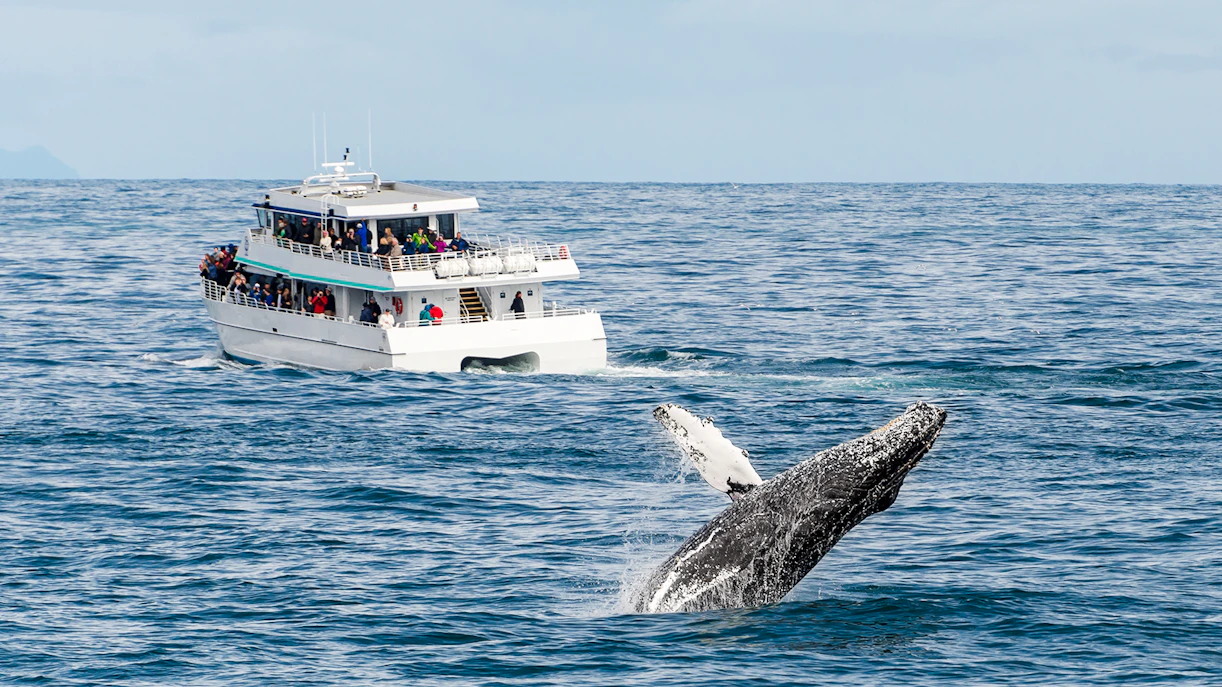
By season
| Season | Pros | Cons |
|---|---|---|
Peak (May–September) | Prime time for whale sightings—humpbacks, minkes, and dolphins are more commonly observed. Crowds are highest. | Tours run frequently; book early. Weather is usually mild but can be foggy in early summer. |
Shoulder (April & October) | Fewer crowds; good whale-watching opportunities. Spring migration brings different species, and early fall offers calm seas. | Fewer daily departures; schedule may be more limited. Weather can be unpredictable, with some cancellations. |
Low (November–March) | Many tour operators scale back or pause services. | Whale watching is mostly limited or paused. Cold, brisk weather and shorter daylight make the experience less predictable and often unavailable. |


